We use cookies to measure traffic and to show relevant advertising. Nothing is stored or sent until you choose, and you can change your choice at any time.
If you ship LCL, you have already accepted a trade-off: you give up control of the container in exchange for not paying for space you don't use. That trade-off is usually fine for freight cost. It is rarely fine for moisture.
In a full container load, you decide what goes in, how it is packed, and where the desiccant hangs. In a less-than-container load, none of that is yours. Your cartons are consolidated with cargo from other shippers, handled at a CFS you may never visit, and loaded into a box whose history you cannot see.
This guide is about the specific problem that creates: how to specify desiccant for LCL shipments when you control the cargo but not the container.
Most desiccant guidance is written for FCL. It assumes a sealed box, a known cargo mix, and a known transit time. LCL breaks all three assumptions.
Your cargo is handled more often. An FCL container is typically stuffed once and opened once. LCL cargo is picked up, consolidated at a CFS, devanned, re-handled at the destination CFS, and delivered. Every one of those handoffs is a period when packaging is exposed to ambient air.
You don't choose your neighbors. Consolidated containers carry mixed cargo: textiles, footwear, furniture, machinery, sometimes agricultural goods. Some of that cargo releases moisture. Some of it is hygroscopic and absorbs moisture. You cannot inspect it, and you cannot ask the consolidator to guarantee a dry box.
Your dwell time is not yours to set. A container waits for the last piece of cargo before it sails. A CFS waits for enough volume to build a container. Those waits happen in whatever climate the CFS sits in, and they are frequently the most humid part of the entire journey.
Your exposure surface is larger per unit of volume. A single pallet occupies a small volume but presents a large surface area to the air in the box. Moisture uptake is a surface phenomenon before it is a bulk one.
The practical consequence: a desiccant strategy copied from an FCL guide will under-protect an LCL shipment, even if the arithmetic looks correct on paper.
The damage mechanism is not "humidity." It is condensation.
Warm air holds more water vapor than cold air. When a container crosses climate zones, or simply experiences day–night temperature swings, the air inside cools. Once the air reaches its dew point, water condenses — most visibly on the underside of the steel roof, which cools fastest.
That condensate accumulates and then drips onto the cargo below. The industry calls it container rain. A related effect, cargo sweat, happens when the cargo itself is colder than the surrounding air, so moisture condenses directly onto the goods or their packaging.
A desiccant does not "dry the cargo." It removes water vapor from the air inside the box so that the dew point stays below the temperature the container will actually reach. That distinction matters, because it means the requirement is driven by the coldest point in the journey, not the average.
The cost of getting this wrong is well documented. TT Club, the transport and logistics insurer, reported that in its 2020 claims data, around 25% of wet cargo damage was caused by water ingress through pre-existing damage to the container — damage a shipper never sees when they don't own the box. The same insurer has stated that roughly two-thirds of cargo damage claims are caused or made worse by poor packing practices. In an LCL shipment, both of those risks sit outside your direct control, which is precisely why the desiccant decision has to compensate for them.
The classic case. Cargo is loaded in a warm, humid port, the vessel crosses into cooler water, and the roof condenses. Damage appears as water staining on the top layer of cartons, mold on upper surfaces, or rust on metal parts that were nowhere near a leak.
For LCL, this is worse than for FCL because you often cannot hang desiccant from the container's ceiling bars — that space belongs to the consolidator's loading plan, and hanging fixtures may not be permitted at all. Protection has to be placed within or immediately around your own cargo.
A pallet of timber, a load of green coffee, or a shipment of unseasoned furniture can release significant moisture into the shared air space. Your cargo then absorbs it. This is the failure mode with no FCL equivalent, because in FCL you would simply not load those goods together.
There is no way to prevent a co-loader's cargo from releasing moisture. What you can do is raise your own absorption capacity and isolate your cartons with a moisture barrier where the value of the goods justifies it.
Cargo sitting at a CFS for days in a humid climate is absorbing moisture before it ever reaches the vessel. Shippers often size desiccant for ocean transit and forget the land side, which in some lanes is the longer and wetter half of the journey.
There is no universal "per container" figure that transfers to LCL, and any supplier who quotes one without asking questions is guessing.
The recognized method is DIN 55474, the German standard for calculating the number of desiccant units required for a given package or volume. It is built on DIN 55473, which defines one desiccant unit as the quantity of desiccant that adsorbs at least 6.0 g of water vapor at 40% relative humidity.
DIN 55474 works from inputs, not rules of thumb. To run it properly you need:
| Input | Why it matters | Where to get it |
|---|---|---|
| Internal volume you occupy (m³) | Sets the air mass you must dry | Calculate from carton dimensions, not container size |
| Packaging moisture content | Wet pallets and fresh timber release water | Ask your packaging supplier; specify kiln-dried timber |
| Barrier permeability | Poly bags and liners slow moisture ingress | Packaging spec sheet |
| Transit time (door to door) | Longer exposure = more water to remove | Forwarder's routing, including CFS dwell |
| Climate profile of the route | Determines the dew point you must stay below | Seasonal data for origin, transshipment, destination |
| Cargo sensitivity | Defines the acceptable humidity ceiling | Product spec, or customer requirement |
Two notes on applying this to LCL specifically.
First, calculate on the volume your cargo occupies, not the container's internal volume. A 40ft high-cube holds roughly 76 m³, but if your shipment is three pallets, you are protecting the air around three pallets — plus a margin for the fact that air moves freely through a shared box.
Second, add a dwell allowance. Because you cannot control how long your cargo sits at a CFS, size for the realistic worst case on that lane, not the sailing schedule. If your forwarder says "typically five days," plan for two weeks.
For a full-container reference calculation, see our guide to how many desiccant bags a container needs; for the broader container-level method, see the container desiccant guide. Neither replaces a DIN 55474 calculation for your actual LCL volume, but they establish the baseline.
LCL narrows the choice, because you are working inside someone else's loading plan.
| Format | Absorption capacity | Best fit for LCL | Watch out for |
|---|---|---|---|
| Calcium chloride (container grade) | High — container-grade products are commonly rated at 200–300% of their own weight, depending on grade and test conditions | Multi-week ocean transit, humid routes, high-value cargo | Becomes liquid as it saturates; requires a leak-proof, absorbent-lined bag and correct hanging or placement |
| Montmorillonite clay | Moderate | Shorter transit, cost-sensitive cargo, general dry goods | Heavy relative to capacity; less effective in high-humidity, long-duration lanes |
| Silica gel | Moderate at ambient humidity; strong at low humidity | Electronics, precision parts, leather and footwear, sealed inner packaging | Cost per unit of water absorbed is high at high humidity; best used inside packaging rather than for the air space |
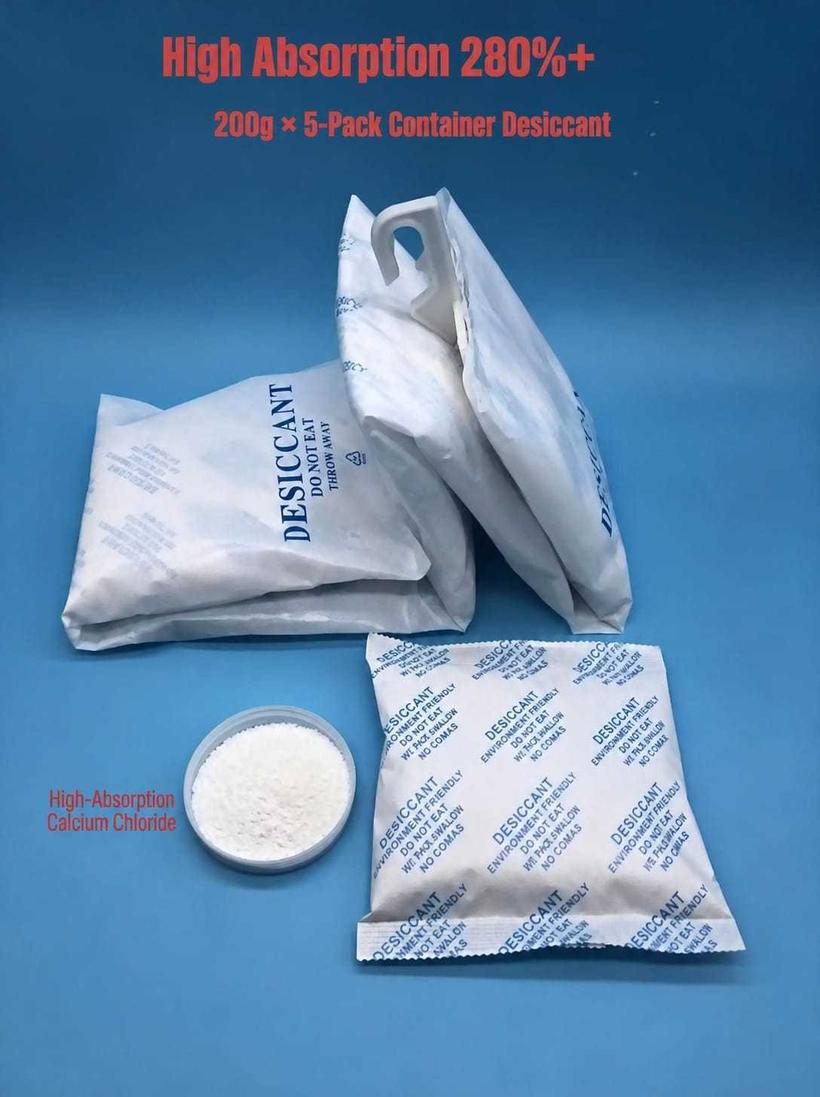
For most LCL ocean shipments of general cargo, container-grade calcium chloride is the practical default because it holds the most water per unit of weight and volume — which is what a shared box with unknown neighbors demands. Our calcium chloride desiccant range is built for this use, with leak-resistant construction.
Where the cargo is sensitive to any liquid risk, or the transit is short, montmorillonite desiccant is the safer, lower-cost option.
For electronics and precision goods, the desiccant belongs inside the sealed inner package, not in the container air. Silica gel in unit doses, combined with a humidity indicator card so the receiving inspection has evidence, is the standard approach.
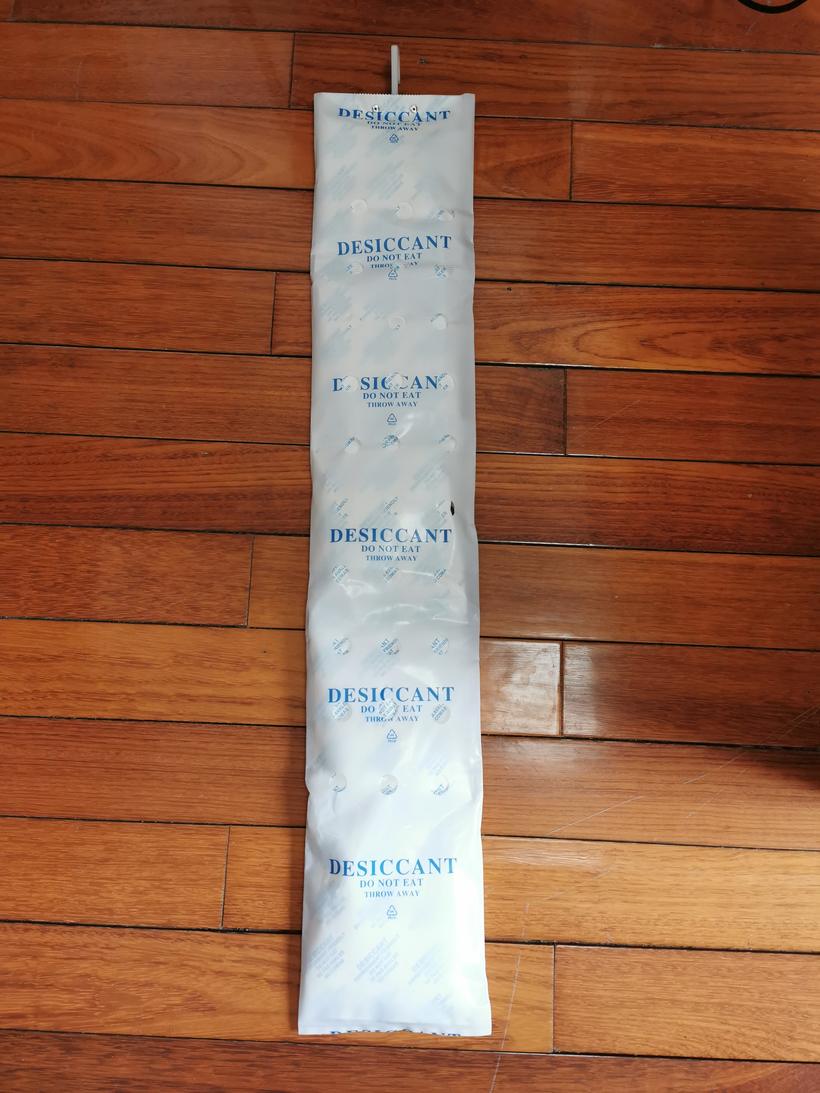
Units also come in strip format: one continuous length broken into sections, so a single fixing point covers a long run along the edge of a stack. It is a mounting convenience, not a different desiccant — the arithmetic is exactly the same.
Placement in LCL is a negotiation with physics and with the consolidator's loading plan.
Put it high, not low. Water vapor is distributed through the air, but condensation forms at the top. Desiccant placed at floor level is working on air that is about to become the coldest, wettest part of the box only after it has already risen.

Spread it, don't cluster it. Several smaller units distributed around your cargo work better than one large unit in a corner, because air movement in a loaded container is poor.
Keep it accessible to air but protected from cargo. A bag crushed behind pallets cannot absorb anything. Hanging from your own pallet, or placing units on top of your stack under a liner, keeps the surface exposed.
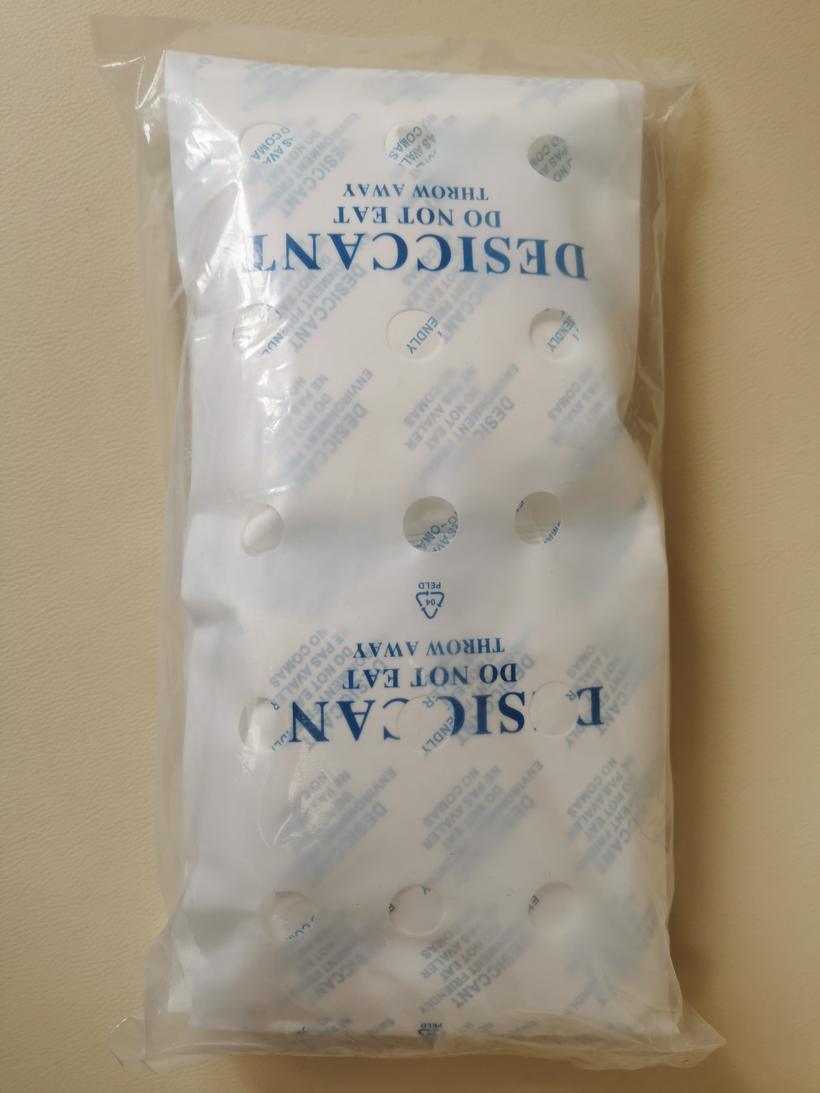
Never place desiccant directly on cargo that can be stained by leakage. Calcium chloride units should be positioned so that even a saturated bag cannot drip onto goods. Use a liner or a drip tray.
Photograph the placement before the container is sealed. This is the single most useful thing you can do for a future claim, and it takes thirty seconds.
Because roughly two-thirds of cargo damage claims are attributed to packing issues, the shipper who can prove correct packing is in a far stronger position than the one who cannot.
Keep, for every LCL shipment:
If damage occurs, this file is what separates "we packed it properly" from an argument.
It depends on the volume your cargo occupies, the transit time, your packaging, and the climate on the route — not on the container size. A 20ft container holds about 33 m³, but if you are shipping four pallets, you are protecting the air around those pallets plus a margin. Run DIN 55474 with your actual inputs and add an allowance for CFS dwell.
Yes, and for some cargo you should. Silica gel is the better choice inside sealed packaging for electronics and precision goods, and where any liquid leakage risk is unacceptable. For the air space of a shared container on a multi-week ocean transit, calcium chloride's higher capacity per unit of weight and volume usually makes it the more economical choice.
With calcium chloride there is, if the bag is poor quality or badly placed. Saturated calcium chloride becomes liquid; a bag that is not leak-resistant, or that hangs directly above cartons, can create the very damage it was meant to prevent. Use leak-resistant units and position them so a failure cannot drip onto goods.
Often yes, but less. A three-day crossing with dry cargo and good packaging may need no desiccant at all. The same cargo waiting ten days at a humid CFS before loading may need it. Size for the whole door-to-door exposure, not the sailing.
Assume it is you. Consolidators manage the container; they do not normally add desiccant on your behalf, and they cannot know your cargo's sensitivity. Treat desiccant as part of your packing specification, document it, and tell your forwarder what you have used.
The rule that matters most is simple: in LCL you are not protecting a container, you are protecting your cargo inside a container someone else controls. That means sizing to your own volume, planning for the dwell time you cannot see, and placing units where your cargo actually is.
Before you specify, check what the cargo actually is. If it is general dry goods that does not fit any of the three types above, the general purpose industrial desiccant range is the better starting point.
Written by the VEN Desiccant export team from the shipment types our buyers actually run and the container, packaging and insurance references listed above. Drafting was AI-assisted; the figures and the consolidation logic were checked and edited by our team before publication. We publish it because LCL shippers are routinely handed FCL dosage advice that does not fit a shared container — and then pay for the damage. Treat your own route, dwell time and cargo data as the controlling input.
Last checked: 18 October 2026.
Give us the transit time, the cargo type and your pallet dimensions — we will run the calculation and reply with a format and a quantity, not a guess.